

Austrian Wine Harvest 2026: Big Aromatics but Reduced Volumes

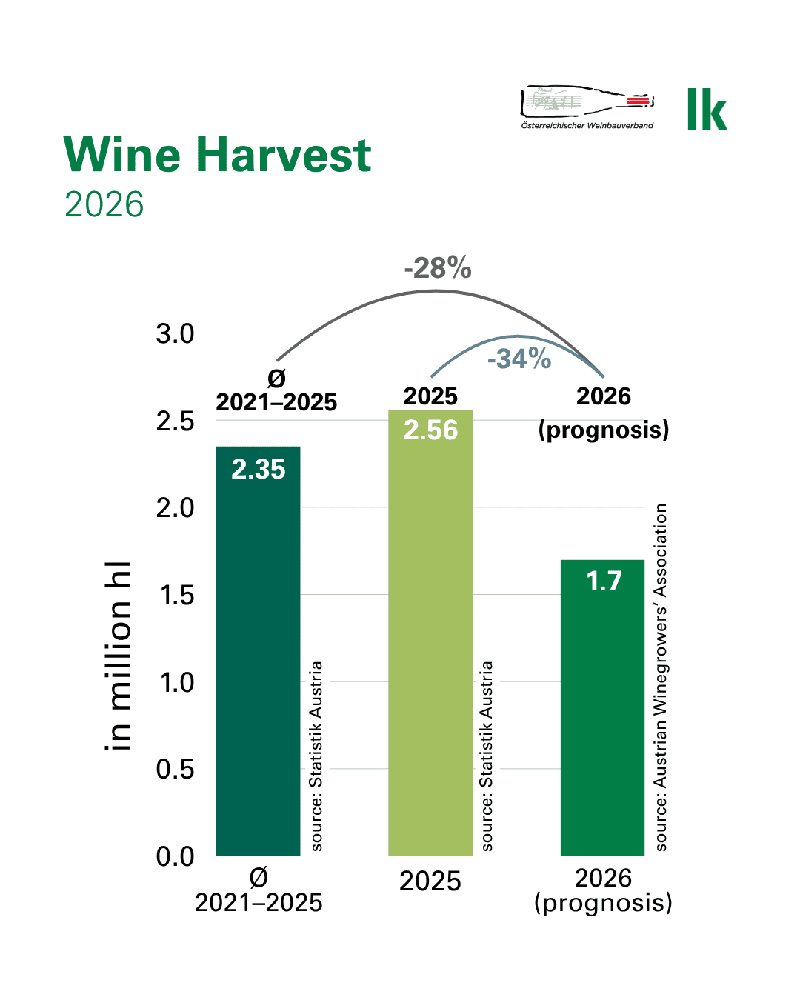
Premature budding, early flowering and high temperatures significantly accelerated grape ripening in 2026. As a result, harvesting also began early this year. At the same time, drought led to considerably reduced yields with a harvest of around 1.7 million hectolitres expected. However, the small, ripe and healthy grapes bode well for quality.
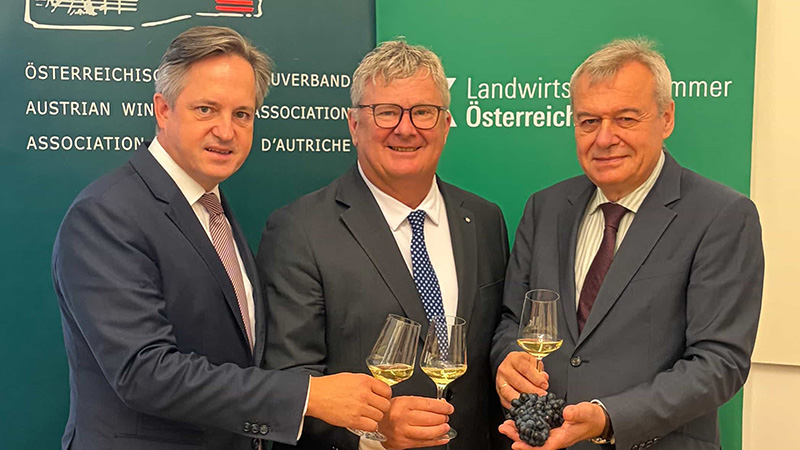
“In many respects, 2026 is an exceptional vintage with early ripening, small berries and low harvest volumes. At the same time, winegrowers are bringing in very healthy, ripe grapes this year. We’re expecting an expressive and aromatic vintage,” said Johannes Schmuckenschlager, President of Austria’s Winegrowers Association.
Low Harvest Volume
In terms of volume, the 2026 harvest is expected to be significantly lower than both last year's harvest and the average of recent years. “According to current information from the winegrowing regions, we’re expecting this year’s harvest to be around 1.7 million hectolitres. That’s over 30% less than the previous year’s harvest,” Schmuckenschlager pointed out. “The extreme drought conditions have clearly left their mark. Many of the berries are very small and this also brings with it a lower must yield.”
Small Berries, Intensive Aromatics
Although the drought has reduced the harvest volume, the quality of the vintage is expected to be good. The low risk of disease means that the grapes harvested are consistently healthy. Harvesting at the right time is one of the most critical factors this year. “Ripening is already well advanced due to the weather conditions, so winegrowers need to begin harvesting early to ensure a harmonious sugar-to-acid ratio,” explained Schmuckenschlager. One of the main characteristics of this vintage is the small size of the berries. “Small berries mean less juice, but a higher concentration of valuable compounds. That’s why we’re expecting particularly aromatic and expressive wines,” explained Schmuckenschlager. He is also optimistic about the prospects for red wines. “The small, darkly coloured and concentrated red-wine grapes point to dense, fully ripe wines.”
Austrian Quality, Challenging Market
Alongside lower yields due to weather conditions, wine producers continue to face a challenging market environment. Declining wine consumption due to changing consumer behaviour, coupled with intense price pressure, is affecting the entire industry. Austria’s winegrowers have a structural advantage here that they can capitalise on. Their wines are not only fresh, artisan-made and high quality, but also produced in an environmentally responsible manner. This provides a strong foundation for Austrian winegrowers to remain competitive in a shrinking market, respond to consumer trends and strategically expand exports.