By: David Bowden | 01 June 2026 3 minutes reading time
Take a journey down the picturesque Danube River and through the panoramic Austrian UNESCO World Heritage Site known as the Wachau.
Waltzing Down the Danube
While not quite the blue that is referred to in the Johann Strauss Blue Danube Waltz, the Danube River is still a most impressive part of the European landscape. Europe’s second-longest river extends for 2,850 km, from the Black Forest in Germany and flows eastward to its mouth in Romania on the Black Sea. In this part of the world, the river is known as the Donau, but everyone understands the Anglicised, Danube. It provides a home for 80 million Europeans and is considered the most international river in the world. Capital cities such as Vienna, Bratislava, Budapest, and Belgrade are situated along the river.
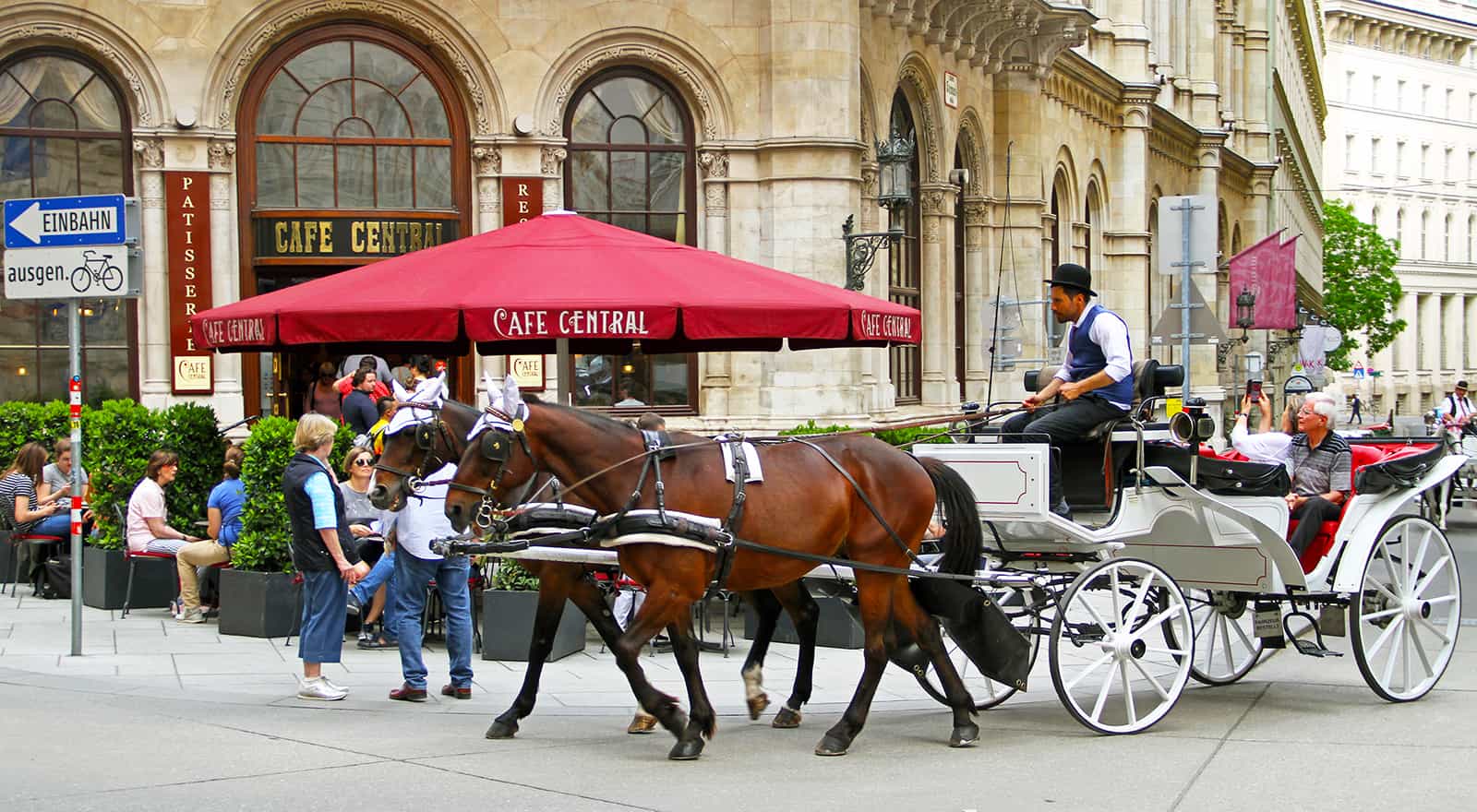
Discover the sights on historic Vienna in a fiacre
It wasn’t my first time in Austria, and when I realised that I had a few extra days to spare, it was without hesitation that I chose to visit the Wachau to enjoy the wines that are produced there, the scenery, enticing food, and to explore the river using various means of transportation.
Acclaimed Cultural Site
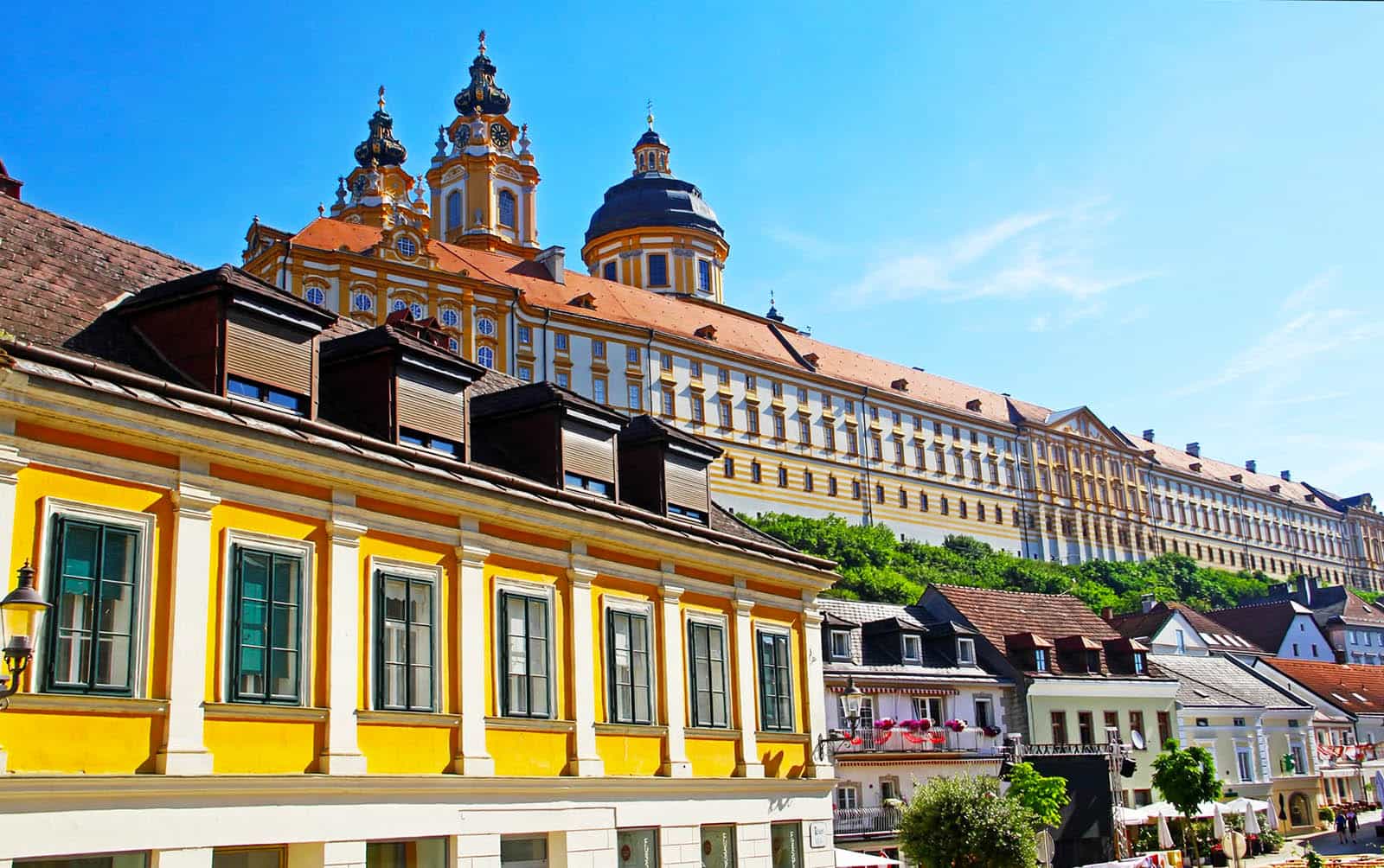
The massive abbey is a landmark building rising high above the small town of Melk
The Wachau (pronounced var cow) is one of the most scenic stretches of the Danube that extends for some 35 km from Melk to Krems. In the year 2000, the Wachau was added to UNESCO’s impressive cultural, heritage, and natural World Heritage List. Its cultural landscape captured the attention of UNESCO along with the historic Benedictine monasteries of Melk and Göttweig and the old town precinct of Krems.
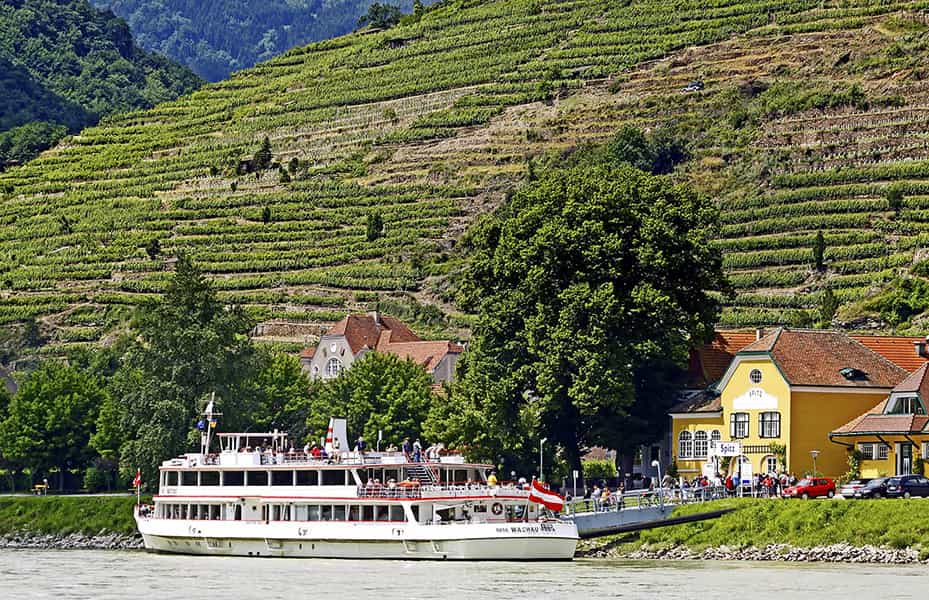
Steep terraced vineyards rise up high from the Danube River in Spitz along the Wachau
In addition, this stretch of river is visually captivating as it includes numerous intact and visible traces of the land use over time. These iconic features include architecture (castles, monasteries, and ruins), urban design (villages and towns), and agricultural practices, especially its vineyards and apricot orchards. With limited flat land on both sides of the Danube floodplain, farmers have, over the centuries, built terraces to farm the adjoining steep land. While an arduous task, it also kept their crops above the river’s flood level. Several religious orders set about cultivating the steep slopes of the Wachau, creating the dramatic landscape of terraced vineyards that are so obvious to the many visitors who cruise along the river. In the ensuing centuries, the land cultivated fluctuated due to changing climatic conditions, the vagaries of the wine market, and labour shortages. By the 18th century, viticulture, or growing grapes, was well-established on the steep terraces.
Monastic Structure
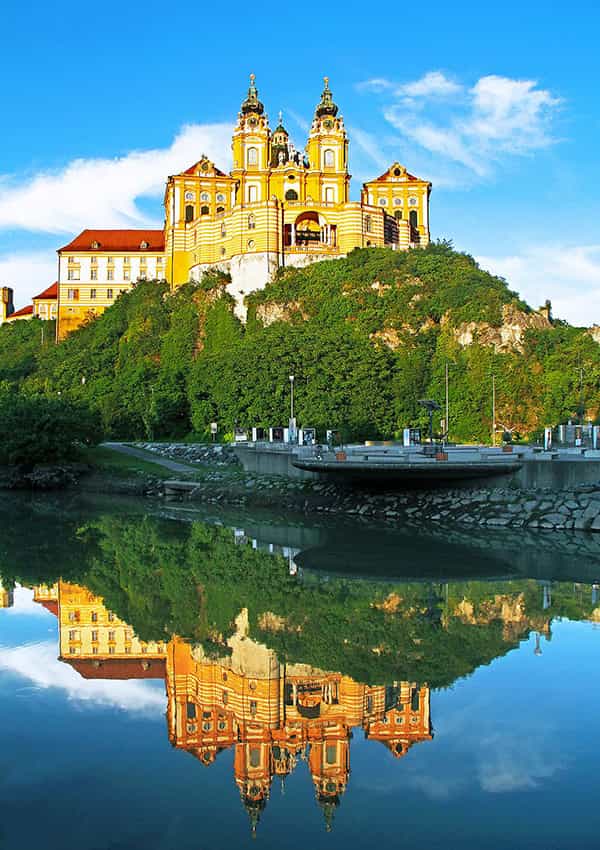
The Melk Monastery is one ofthe most imposing sites to visit in the Wachau
I arrived in Melk by train, directly from Vienna Airport, but with a change of train at St Polten. While I’d read about the Melk Monastery, I was unprepared for this distinctive mustard yellow monastery that dominates the town. It was a leisurely walk from the station to my accommodation, the Hotel Wachauerhof, just below the monastery, and a short stroll along a cobblestoned street to the town centre. It took me a day to realise that the monastery is extremely popular during daylight hours due to its proximity to Vienna, but by evening, most had returned to the capital. Tours of parts of the monastery are available, and while previous structures date back to the Middle Ages, the Baroque building that now stands on the site only dates back to 1809. It’s still a working monastery, but I didn’t see any monks while admiring the historic interior, relics, and the most impressive library.
Cruising the Danube
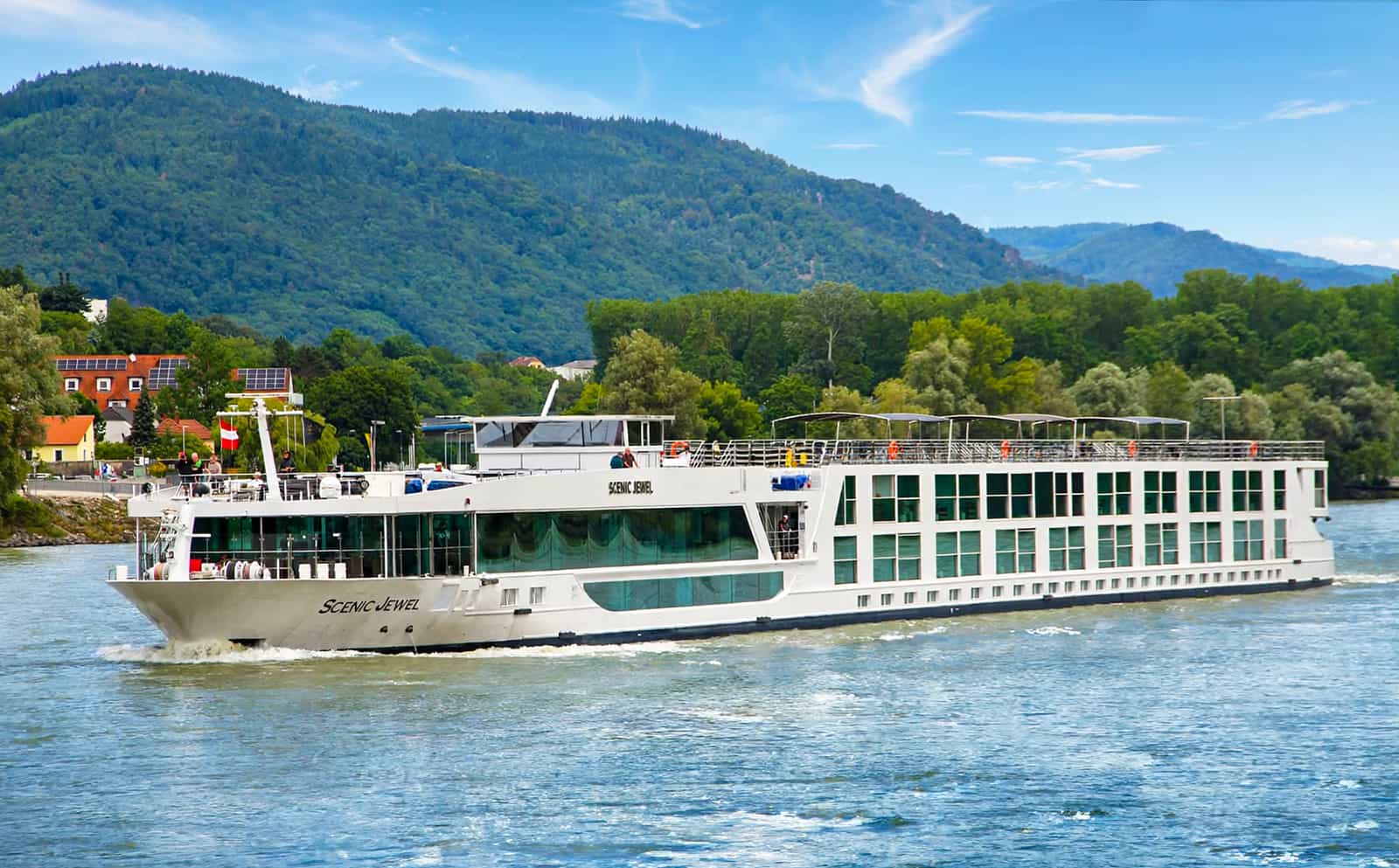
A multi-day Danube River cruise is the best way to take in the picturesque Wachau.
It was then off for an afternoon cruise to Spitz and then by train to Dürnstein. While I joined hundreds of other sightseers on the MV Dürnstein, I watched several sleek luxury cruise boats, like one from CroisiEurope, pass along the river. These boats operate multi-day river cruises, with the Wachau being one of several highlights.
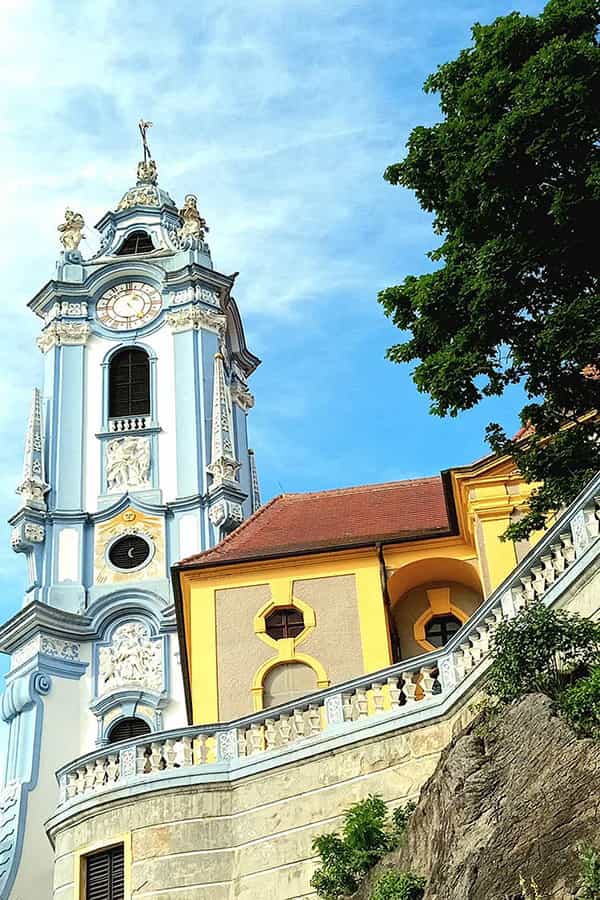
The blue and white spire of Durnstein Abbey is a prominent landmark in the Wachau
As our boat motored along the Danube, everyone was treated to fascinating views of terraced vineyards and tranquil villages on both banks of the river. My plan was to get off at Spitz, catch a train to Dürnstein for dinner, and then return to Melk by bus.
Spitz is a small town, but on a summer afternoon, it was packed with boats on the river, cars being ferried across the river, and cyclists using paths on both sides of the river. Vineyards extend from the town limits, and a visit to Klosterhof Spitz enabled me to enjoy local wines made from grape varieties such as Riesling and Grüner Veltliner.
It was a short train journey to Dürnstein, which is a charming tourist village famous for its Medieval castle ruins and church. While the ruins of the Dürnstein Castle are set high above the Danube, it’s the power-blue abbey/monastery that is one of the iconic images of the Wachau. While the appearance of this Order of St. Augustine landmark has been altered several times, it is the baroque features of the famous monastery that visitors now come to see.
It was easy to appreciate why the town was full of tourists who wandered along narrow cobblestone streets lined with heritage buildings, boutique shops, and local art galleries. While too touristy for some, I enjoyed my visit, especially after discovering a wine bar where local wines were offered by the glass at very affordable prices.
Wine on the Terrace
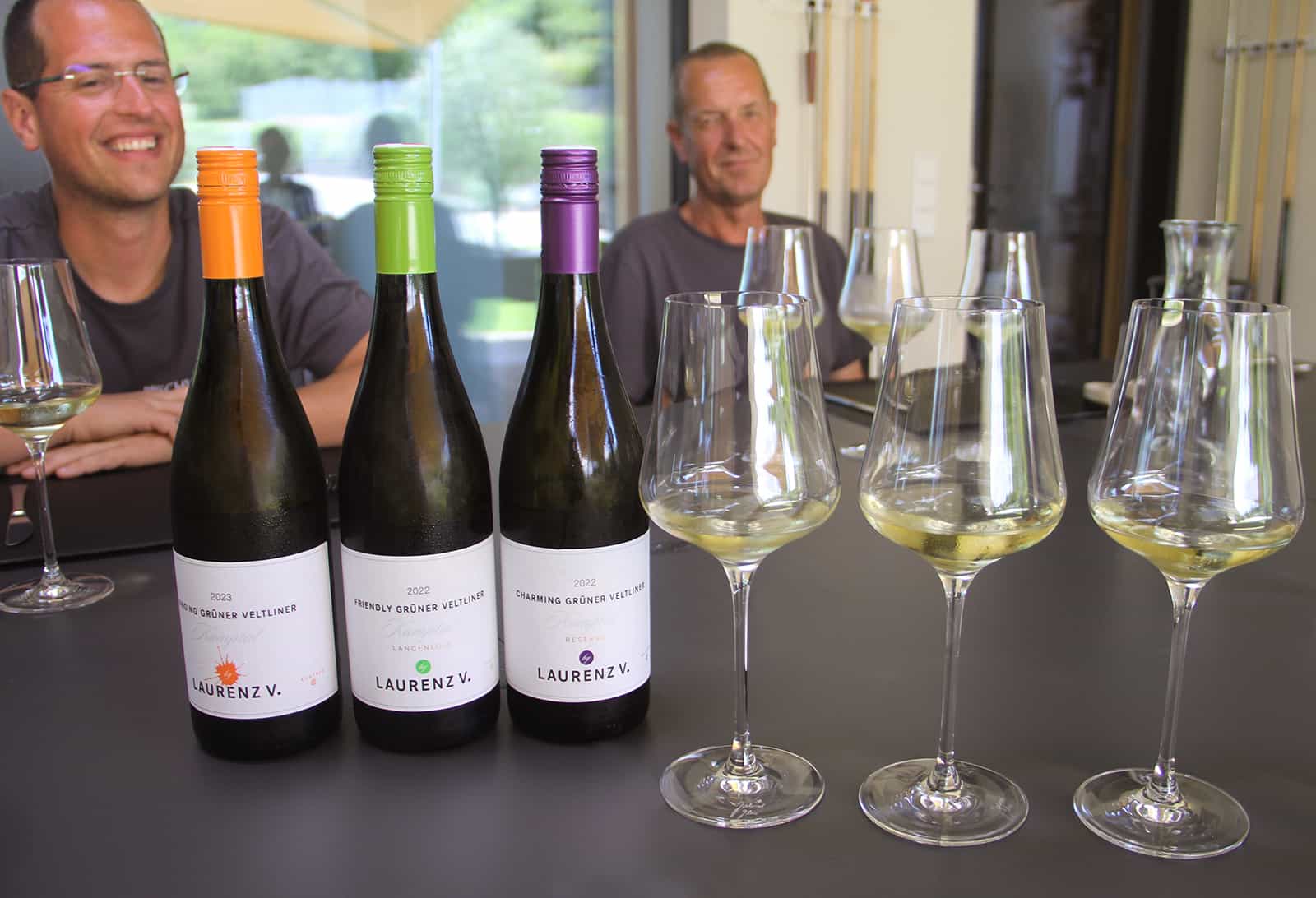
Estates such as Laurenz V make superb wines from Gruner Veltliner grapes
With wines on my mind, I travelled to Krems on the next day to admire its historic town centre with its medieval buildings, trendy cafés, galleries, and boutiques. However, my urban ramblings were brief as I was heading to the wine estate of Peter Schweiger to the north of the towns of Krems and Langenlois. I had enjoyed the Austrian wines of Laurenz V (Laurenz Five) at Christoph’s Restaurant in Penang and wanted to know more. One variety captured my attention.
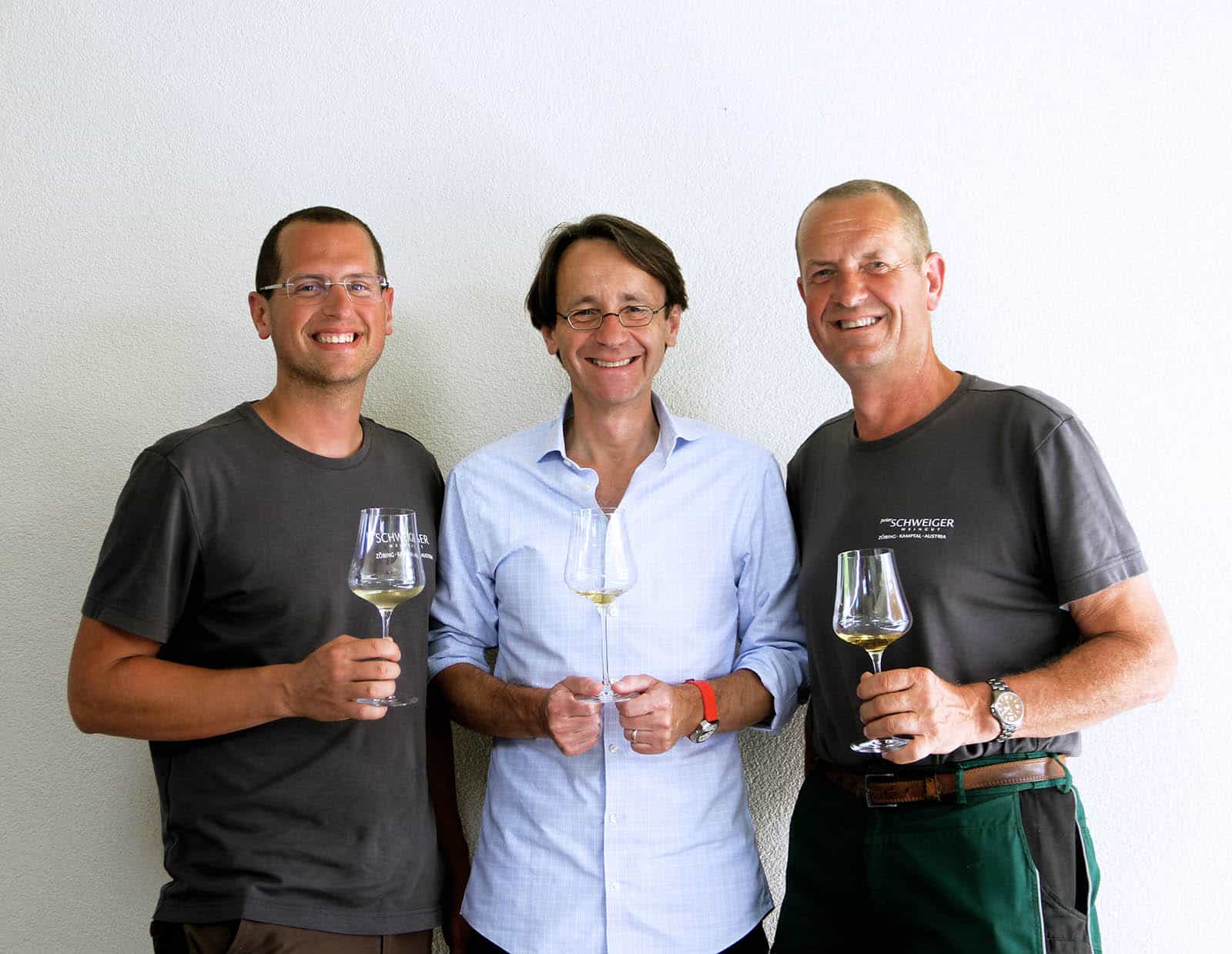
The winemaking and marketing team at Laurenz V Kamptal
Laurenz V is a company that only produces Grüner Veltliner, so it was logical that I should seek these out in my Wachau excursion. Grüner Veltliner (pronounced grew-ner-velt-leaner) accounts for a third all Austria’s wine production and is deservedly the shining star of the nation’s wines. This white wine is worthy of attention, especially in Asia, where it pairs perfectly with many cuisines and dishes. Laurenz V has been instrumental in propelling Grüner Veltliner into the international spotlight. The grapes are sourced from Kamptal, and the wines are crafted in Zöbing by fourth-generation winemaker Peter Schweiger. This region is considered the cradle of Austria’s signature white grape variety, and its famous Heiligenstein is the epicentre of the region’s viticulture.
This wine style has a crisp acidity, concentrated flavours, subtle spice, and vibrant minerality. Descriptive words for Grüner Veltliner include spicy, peppery, and fruity. Along with Riesling, Grüner Veltliner thrives in the northern part of Austria (Niederösterreich) in regions such as the Wachau and the neighbouring areas such as Kremstal and Weinviertel.
Culinary Treats
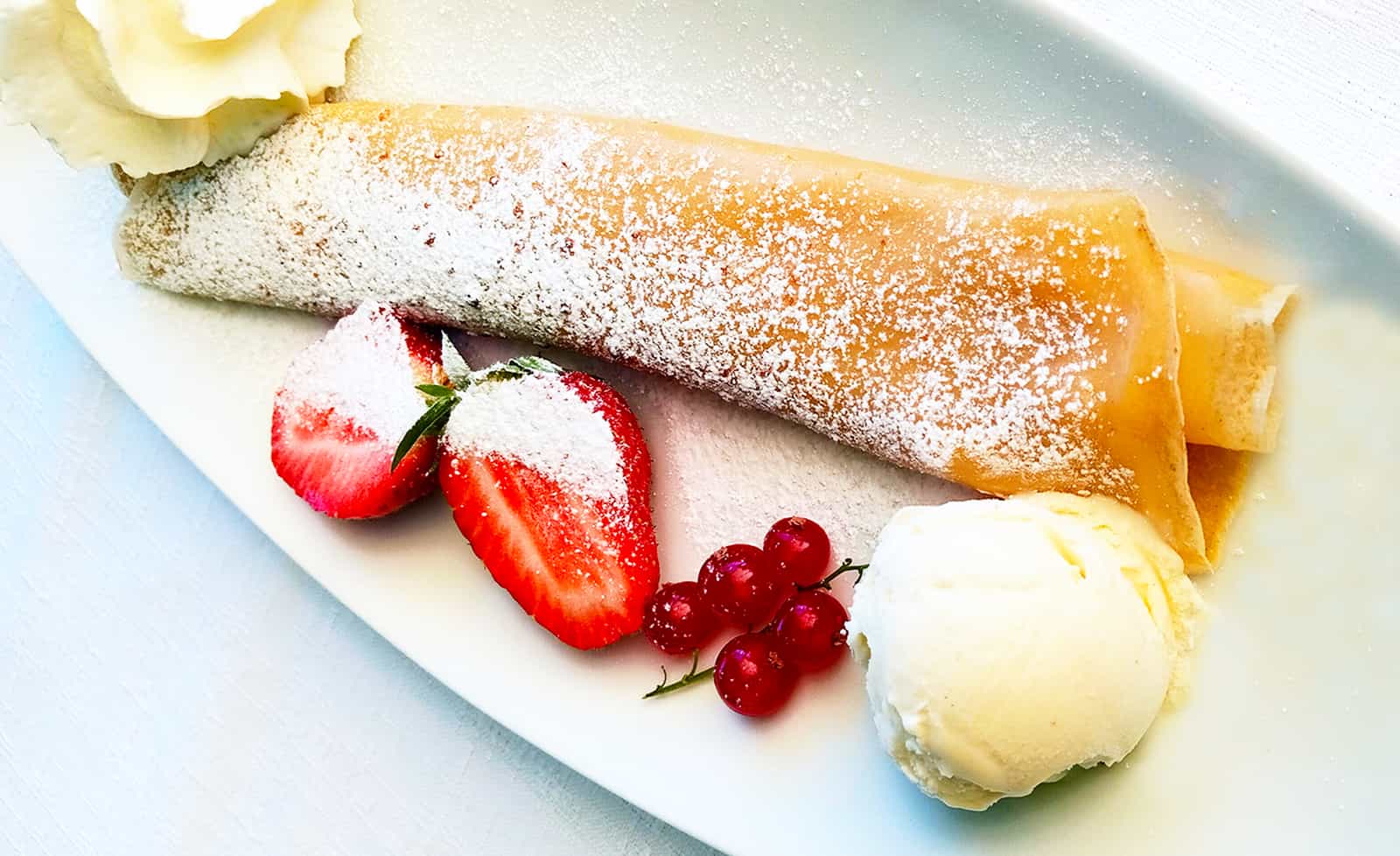
Apricot crepe cream and vanilla ice cream is a local treat
Each evening, I looked forward to dining out as it meant enjoying classic Austrian dishes paired with reasonably priced local wines. Traditional Austrian dishes like Wiener schnitzel and apfelstrudel are served, along with regional treats such as desserts made from seasonal apricots. In Melk, I dined in Rathauskeller Melk and the Hotel Restaurant zur Post. Another highlight was dining at the riverside restaurant along the terrace of the Hotel Richard Löwenherz in Dürnstein. Seated beneath plane trees I happily watched the busy river traffic, sipped a Domöne Wachau Grüner Veltliner and dined on a saddle of veal with creamy potatoes and lingonberries. The meal was complete with an apricot pancake complemented by a luscious glass of beerenauslese dessert wine.
Austria always impresses with the Wachau, one of the brightest gems in the nation’s tourism crown.
Travel File
Vienna isn’t the most accessible European destination for Malaysian travellers, as it requires at least one transit stop. Austrian Airlines (www.austrian.com) flies from Bangkok with connecting flights to Kuala Lumpur with its global alliance airline partner. Trains operated by Austrian Railways, or ÖBB (www.oebb.at), depart directly from Vienna Airport to Melk via St Polten. Onboard facilities, especially in first class on a Railjet, are excellent and include substantive meals and enticing beverages, including Austrian wines, served at your seat. The rail journey from Vienna to Melk takes about 90 minutes.